- Disability rights attorney Harriet McBryde Johnson, who was born with a congenital muscular disease, wrote a fascinating account of meeting philosopher Peter Singer, who has argued that it is sometimes morally acceptable to withhold treatment from impaired infants.
- Singer's book on this topic (and others) is called Practical Ethics.
- McBryde Johnson's memoir is titled Too Late to Die Young.
- McBryde Johnson also argued to keep Terri Schiavo alive before the courts decided in favor of euthanasia.
- Here's a lengthy TV interview with McBryde Johnson by a philosopher:
Showing posts with label impaired infants. Show all posts
Showing posts with label impaired infants. Show all posts
Sunday, May 1, 2011
Infants
Here are some links related to our class section on the ethics of treating infants with severe impairments:

Monday, April 25, 2011
Persennhood
Here are some links related to our ongoing discussion of the the moral status of persons:

- Just a reminder that our term paper is on this topic.
- Here is the Catholic Encyclopedia entry on person.
- Here is a nice essay that examines various proposed criteria for personhood, such as intelligence and the ability to communicate.
- Are dogs persons? One of my favorite radio shows recently devoted 3 episodes to the science of what dogs can and cannot understand. Listen below:
Part One
Part Two
Part Three - How about dolphins: are they sea-persons?
Tuesday, April 5, 2011
The Ethics of Killing
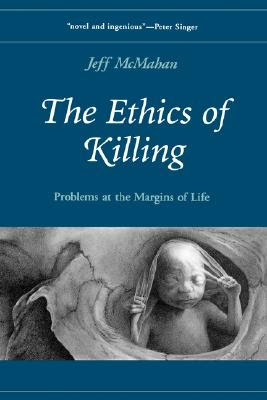 If you're interested in some thoughtful analysis of abortion, euthanasia, stem cells, impaired infants, cloning, killing, and personhood, among other things, you should check out Jeff McMahan's The Ethics of Killing. Here's a short description of the book:
"This magisterial work is the first comprehensive study of the ethics of killing, where the moral status of the individual killed is uncertain. Drawing on philosophical notions of personal identity and the immorality of killing, McMahan looks carefully at a host of practical issues, including abortion, infanticide, the killing of animals, assisted suicide, and euthanasia."McMahan teaches philosophy at Rutgers. He also just wrote a follow-up book called Killing in War (here's an audio interview with him on that book). This is exactly the kind of careful, thought-out approach that I think difficult, important issues deserve.
Thursday, March 24, 2011
Term Paper Guideline
Due Date: at the beginning of class on Wednesday, May 11th, 2011
Worth: 30% of your final grade
Assignment: Write an argumentative essay on the topic below. Papers must be typed, and must be between 600-1200 words long. Provide a word count on the first page of the paper. (Most programs like Microsoft Word have automatic word counts.)
Topic: Explain and defend your definition of person as it relates to morality, and specifically to the ethics of stem-cell research, abortion, and impaired infants.

Worth: 30% of your final grade
Assignment: Write an argumentative essay on the topic below. Papers must be typed, and must be between 600-1200 words long. Provide a word count on the first page of the paper. (Most programs like Microsoft Word have automatic word counts.)
Topic: Explain and defend your definition of person as it relates to morality, and specifically to the ethics of stem-cell research, abortion, and impaired infants.
(1) First, briefly explain and critically evaluate the different definitions of “person” that we have discussed in class. Be sure to explain each definition offered by the President’s Council on Bioethics, Michael Sandel, Mary Anne Warren, Tristram Engelhardt, and John Robertson.When considering your definition of person, be sure to consider and answer the following questions: Which living entities are persons, and which living entities are not persons? Do you believe one needs to be a person in the moral sense in order to be worthy of moral consideration (for instance, do some non-persons have a right to not be killed and a right to not suffer unnecessarily)? Do persons have special moral significance? Can someone have moral rights before they have moral duties? Be sure to fully explain and philosophically defend each of your answers.
(2) Second, explain how each of the following authors uses the concept of “person” to attempt to settle the particular ethical debate she or he wrote about (The President’s Bioethics Council and Sandel on stem-cell research; Warren and Marquis on abortion; and Engelhardt and Robertson on impaired infants).
[NOTE: Some of these authors think personhood is irrelevant to their issue.]
(3) Third, explain and defend your own definition of “person”: do you agree with one of these authors’ definitions, or do you have one of your own?
(4) Fourth, explain the solution your definition of “person” gives to the ethics of stem-cell research, abortion, and impaired infants.
Subscribe to:
Posts (Atom)
